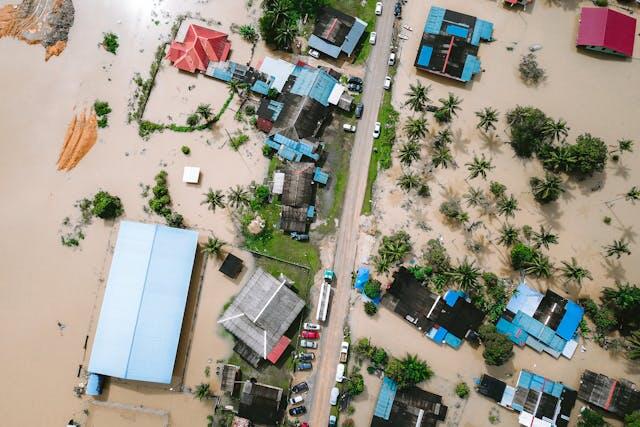
The stormy weather with heavy rain and strong winds affecting much of Spain is causing rivers to burst their banks, roads to be cut off, transport services to be disrupted and thousands of people to be evacuated in the south of the peninsula. It is not just rain in Andalusia, but throughout the country, as there has also been snowfall, strong winds and flooding. Don't forget that your home and car insurance also cover these cases.
Today we explain who is responsible for the damage caused by the storm, how to claim for damages and what happens if you cannot get to work.
How to claim for storm damage
You must notify your insurance company as soon as possible. The law gives you a maximum of 7 days from the date of the flooding to claim compensation. In this case, it is advisable to check your car and/or home insurance cover to see if it covers damage caused by extraordinary weather events.
You should also provide as much evidence as possible of the events, such as photos and videos of each type of damage (floors, furniture, appliances, etc.), make a list of what has been damaged and the approximate value of each item, and keep receipts or invoices for urgent expenses (accommodation and cleaning).
If there are any official reports (police, fire brigade, civil protection), these should also be provided, as they help to justify the damage.
Insurance Compensation Consortium
In Spain, when we are faced with extraordinary phenomena such as severe flooding, it is not always the insurance company that pays, but rather the Insurance Compensation Consortium (CCS) that covers the direct damage caused by the flooding. Meanwhile, if you have coverage for atmospheric phenomena, the insurer will only pay for direct damage caused by rain.
The Consortium will normally compensate for damaged homes, flooded vehicles, affected businesses and related economic losses.
To claim compensation from the Consortium, you can contact them directly. You can do this from the outset. Once the damage has been reported, the insurance or Consortium assessor will visit the site to assess the damage and prepare a technical report.
Compensation for damage
Once the damage has been assessed by the loss adjuster, the Consortium or the insurer will specify the amount of compensation based on what is covered by the policy. Payment is usually made by bank transfer.
If the damage is not ‘extraordinary’, part of it may be covered by traditional insurance depending on the cover taken out. Therefore, if you disagree with the expert's report because it underestimates the damage, you can request an independent expert for a second assessment, as well as make a written claim.
Legal tips in the event of damage caused by bad weather
Here are four legal tips on what to do in the event of damage caused by bad weather:
- Do not throw away anything that is broken until the loss adjuster has visited or photographic evidence of the damage has been taken.
- Keep all communications with the insurance company (emails, claim numbers, names of contact persons).
- If there is serious structural damage, consider seeking independent technical advice.
- If the insurer delays or makes excuses, you can file a claim with the company's Customer Service Department or the Insurance Compensation Consortium, which acts when your insurance company does not want to take responsibility or in cases of force majeure (it is advisable to seek legal advice beforehand).
Leave due to inability to access the workplace
The Workers' Statute states that workers are entitled to up to four days of paid leave if they are unable to reach their workplace or travel on the roads necessary to get there as a result of recommendations, restrictions or prohibitions on travel established by the competent authorities due to a disaster or adverse weather conditions. After four days, the leave will be extended until the circumstances that justified it disappear.
This paid leave is maintained with the right to remuneration and requires that
the worker notify as soon as possible that they are unable to go to work and provide evidence of the cause (e.g. official notices about transport service interruptions, media coverage of the event, etc.).
Teleworking due to inability to reach the workplace
It should be noted that when the nature of the work is compatible with remote working and the state of the communication networks allows it, the company may establish this, observing the other formal and material obligations set out in Law 10/2021 of 9 July on remote working, and, in particular, the provision of adequate means, equipment and tools.

